
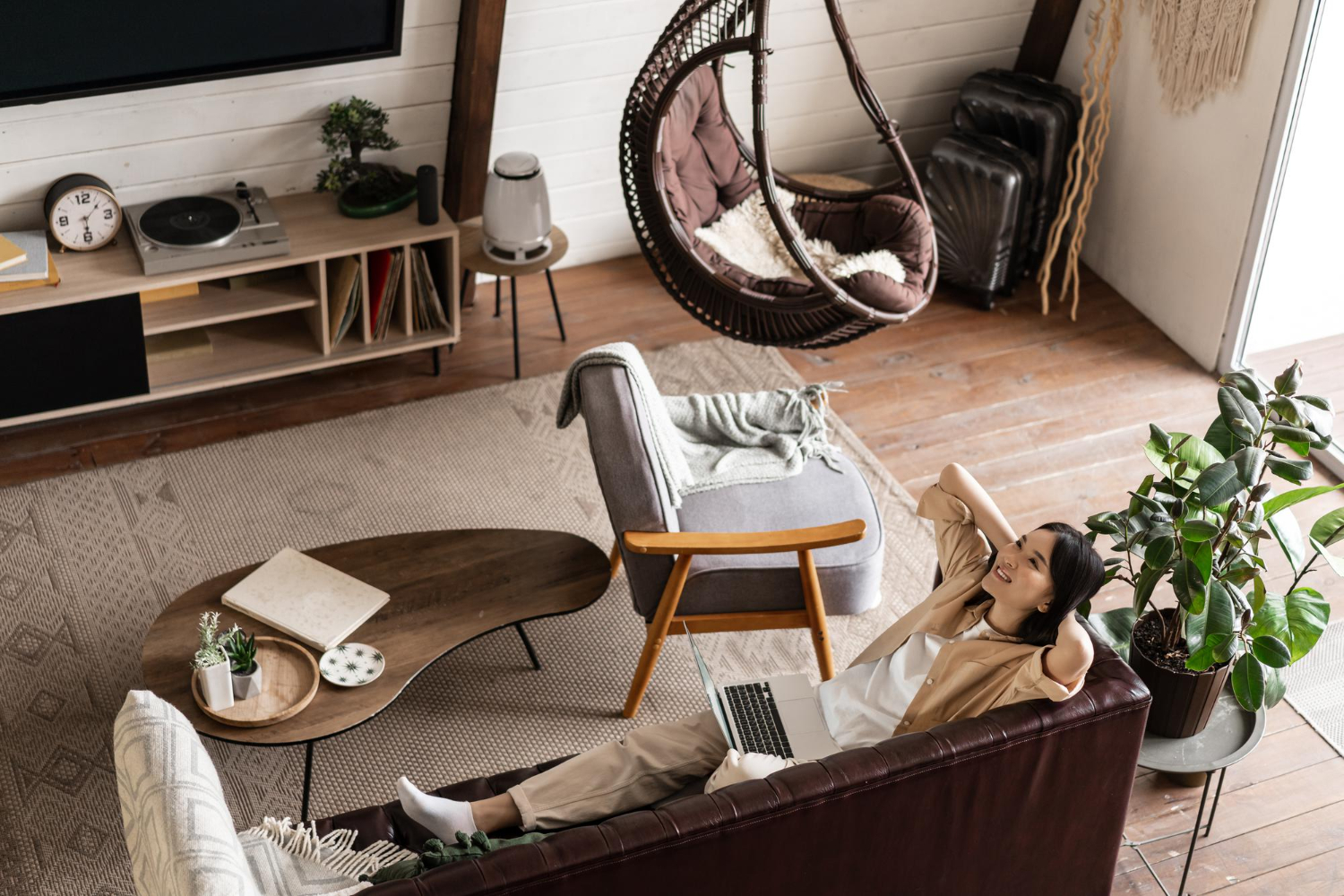
Building a cohesive home entirely from second-hand finds sounds like one of those design goals that only works in theory. Too many styles, too many eras, too many “this was a good deal so I bought it” moments—and suddenly your space feels more like a storage unit than a home.
But when it’s done with intention, second-hand furniture can actually create a more interesting and personal space than buying everything new. The key isn’t finding matching pieces. It’s creating consistency through choices that repeat in subtle ways.
Here’s how to make it work.
Start With a Simple Color Direction
You don’t need a strict palette, but you do need a direction.
Pick two or three base tones you want to see throughout the home—something like warm wood tones, black metal accents, or soft neutrals. This becomes your filter when shopping second-hand.
You’ll still find mismatched pieces, but they’ll feel connected if they share a common tone or material family.
Let Material Consistency Do the Heavy Lifting
When furniture styles vary, materials are what hold everything together.
For example:
- Repeating wood tones across different eras
- Using consistent metal finishes (matte black, brass, steel)
- Sticking with similar fabric textures (linen, cotton, canvas)
Even if a chair and a table don’t match stylistically, they’ll feel like they belong in the same space if the materials speak the same language.
Don’t Chase Sets—Curate Instead
One of the biggest mistakes in second-hand decorating is trying to recreate furniture sets.
Thrifted homes look better when pieces feel collected over time rather than purchased as a bundle. A matching dining set from one store can feel flat compared to a mix of chairs that share a common tone but differ slightly in shape.
Cohesion doesn’t come from matching—it comes from restraint.
Refinish Instead of Replacing
Second-hand furniture rarely needs to stay exactly as you find it.
Simple updates can unify pieces quickly:
- Sanding and restaining wood to match tones
- Painting mismatched items in a consistent color
- Swapping hardware across different pieces
A coat of paint or stain can turn unrelated items into a coordinated set without changing their structure.
Repeat Shapes Across Rooms
Even when furniture varies, repeating shapes creates visual consistency.
For example:
- Rounded edges in multiple rooms
- Straight, boxy silhouettes used throughout
- Consistent leg styles on tables and chairs
Your eye starts recognizing patterns, which makes the space feel more intentional even if nothing technically matches.
Balance “Statement” and “Background” Pieces
A cohesive home needs breathing room.
Not every thrift find should compete for attention. Some pieces should stand out—a bold chair, a vintage mirror, a unique table—while others quietly support the space.
Too many statement pieces in one room creates visual noise. Cohesion comes from balance, not uniformity.
Use Textiles as the Unifier
If furniture styles vary a lot, textiles can pull everything together.
Rugs, curtains, cushions, and throws are the easiest way to create harmony across different eras and finishes. A consistent fabric palette can make mismatched furniture feel like it belongs in the same home.
This is often where cohesion actually happens.
Edit Ruthlessly (This Is the Hard Part)
Second-hand shopping encourages accumulation. Cohesive design requires editing.
Just because something is a good deal doesn’t mean it fits the system you’re building. Every new piece should answer a simple question: does this support the overall direction of the space?
If not, it’s just adding noise.
Accept a Little Imperfection
A fully matching home can feel sterile. Second-hand spaces naturally carry variation—different wood tones, slight style differences, visible history.
Instead of fighting that, lean into it. Cohesion doesn’t mean everything looks the same. It means everything feels like it belongs in the same story.
A cohesive home built from second-hand finds isn’t about hunting perfect pieces.
It’s about setting quiet rules and sticking to them.
Color direction, material consistency, and careful editing do more for cohesion than matching sets ever will. Once you start thinking in patterns instead of individual items, thrifted furniture stops feeling random—and starts feeling designed.