
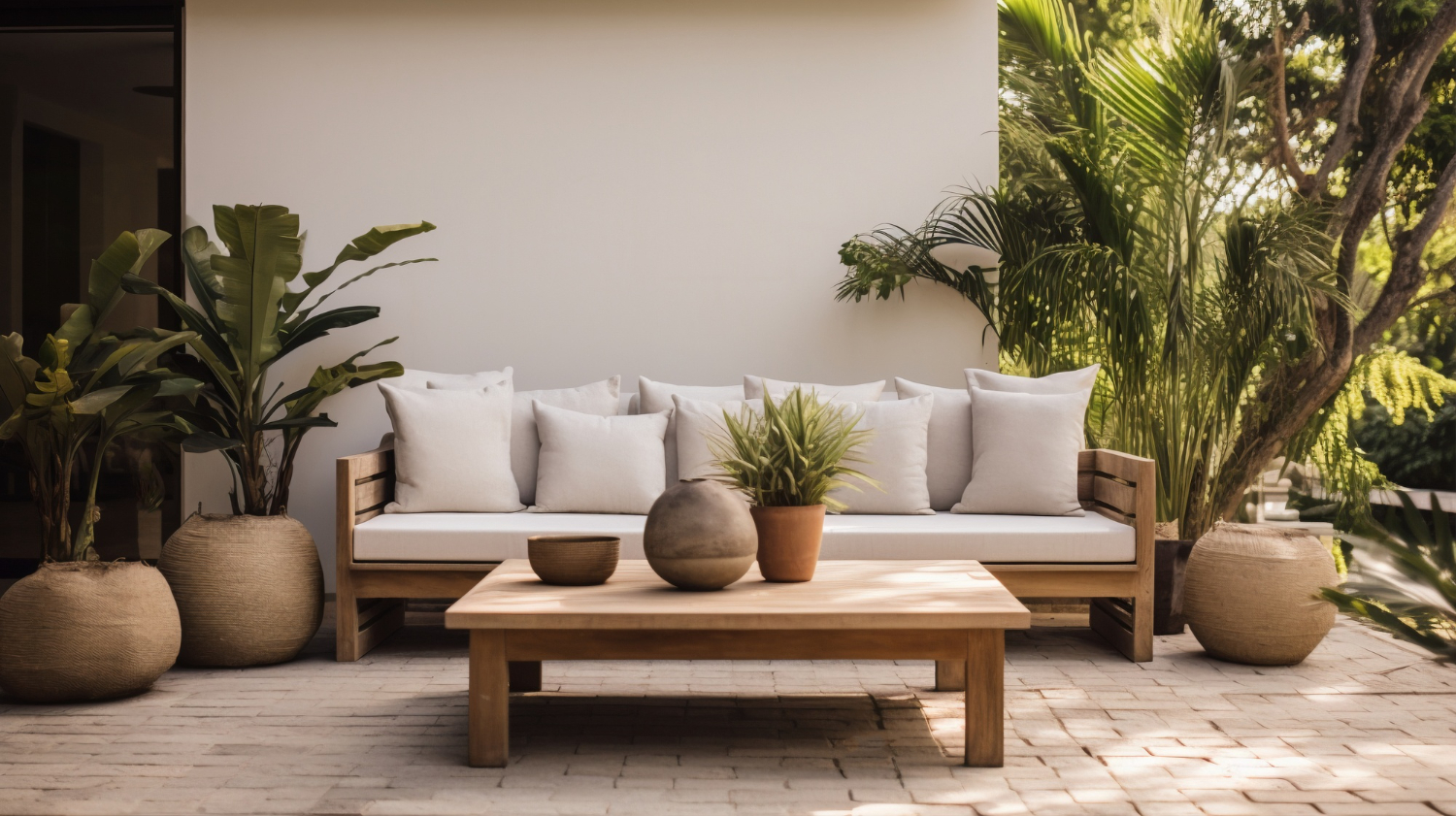
Outdoor furniture lives a much harder life than indoor pieces. It has to deal with sun, rain, humidity, temperature swings, wind, and sometimes snow—all while still looking presentable. The difference between furniture that lasts one season and furniture that lasts years usually comes down to one thing: material choice.
Some materials are built for exposure. Others only look like they are.
Teak (Best Overall for Long-Term Outdoor Use)
Teak is widely considered the gold standard for outdoor furniture because it’s naturally built to handle the elements.
Why it works:
- High natural oil content resists water and rot
- Extremely dense wood structure
- Holds up well in sun, rain, and humidity
- Can last decades outdoors
Over time, teak develops a silver-gray patina, but the structural integrity remains strong.
Trade-offs:
- Expensive
- Heavy
- Requires occasional cleaning to maintain appearance
Best for: long-term patio sets, premium outdoor dining furniture.
Powder-Coated Aluminum (Best All-Around Metal Option)
Aluminum is one of the most practical outdoor materials, especially when powder-coated for protection.
Why it works:
- Naturally rust-resistant
- Lightweight and easy to move
- Powder coating adds protection against corrosion and fading
- Handles rain and humidity well
Unlike steel, aluminum doesn’t rust, making it ideal for wet or coastal environments.
Trade-offs:
- Can dent if impacted
- Lightweight frames may shift in strong wind if not weighted
Best for: modern patio furniture, balconies, poolside seating.
Stainless Steel (Best for Strength and Modern Design)
Stainless steel is strong, sleek, and highly durable when properly treated for outdoor use.
Why it works:
- High structural strength
- Resistant to corrosion (especially marine-grade steel)
- Handles heavy use without bending
Trade-offs:
- Can get hot in direct sun
- Heavier and more expensive than aluminum
- Lower-quality grades may still rust over time
Best for: high-end outdoor frames and modern industrial designs.
Synthetic Resin Wicker (Best Low-Maintenance Option)
Unlike natural wicker, synthetic resin wicker is designed specifically for outdoor durability.
Why it works:
- UV-resistant and weatherproof
- Doesn’t crack or splinter like natural fibers
- Flexible and comfortable
- Easy to clean
It’s typically woven over aluminum frames for added stability.
Trade-offs:
- Lower-quality versions can become brittle over time
- Not as structurally strong as metal or wood alone
Best for: casual seating, lounge sets, covered patios.
HDPE Plastic (Best Budget Weatherproof Material)
High-density polyethylene (HDPE) is one of the most weather-resistant plastics used in outdoor furniture.
Why it works:
- Resistant to moisture, sun, and temperature changes
- Doesn’t rot, crack, or peel
- Low maintenance and easy to clean
- Often made from recycled materials
Trade-offs:
- Heavier than standard plastic
- Less “premium” appearance compared to wood or metal
Best for: budget patio sets, beach houses, family-friendly outdoor spaces.
Concrete and Stone (Best for Permanence)
Concrete and stone furniture is built for stability and extreme durability.
Why it works:
- Extremely weather-resistant
- Heavy enough to resist wind movement
- Minimal maintenance required
- Long lifespan
Trade-offs:
- Very heavy and difficult to move
- Can stain if not sealed
- Limited design flexibility
Best for: permanent outdoor installations, fire pit tables, architectural spaces.
Outdoor Fabrics (Just as Important as Frames)
Even if the frame is weatherproof, cushions and fabrics need to hold up too.
Best options:
- Solution-dyed acrylic (like Sunbrella-type fabrics)
- Polyester blends designed for UV resistance
Why they work:
- Resist fading from sun exposure
- Repel moisture and mildew
- Dry quickly after rain
Trade-offs:
- Higher cost than standard fabrics
- Still require occasional cleaning
Best for: cushions, lounge seating, outdoor pillows.
Materials That Don’t Hold Up Well Outdoors
Some materials look fine at first but degrade quickly outdoors.
Avoid:
- Untreated or soft woods (like pine)
- Non-coated steel (rust risk)
- Indoor-only fabrics
- Cheap plastic that becomes brittle in sunlight
These materials often fail due to moisture absorption, UV damage, or temperature changes.
Simple Durability Ranking
From most to least weather-resistant:
- Teak
- Powder-coated aluminum
- Stainless steel
- Synthetic resin wicker
- HDPE plastic
- Untreated wood / low-grade metal / indoor fabrics
The Real Rule That Matters
Outdoor durability depends on two things:
- Resistance to moisture
- Resistance to UV exposure
If a material fails either category, it will eventually break down outdoors—no matter how good it looks on day one.
Outdoor furniture doesn’t need to be replaced every season if you choose correctly.
- Teak offers long-term natural durability
- Aluminum provides lightweight weather resistance
- Resin and HDPE offer low-maintenance affordability
- Proper outdoor fabrics complete the system
The best outdoor furniture isn’t the most stylish piece—it’s the one that can sit outside all year and still function when you need it.