
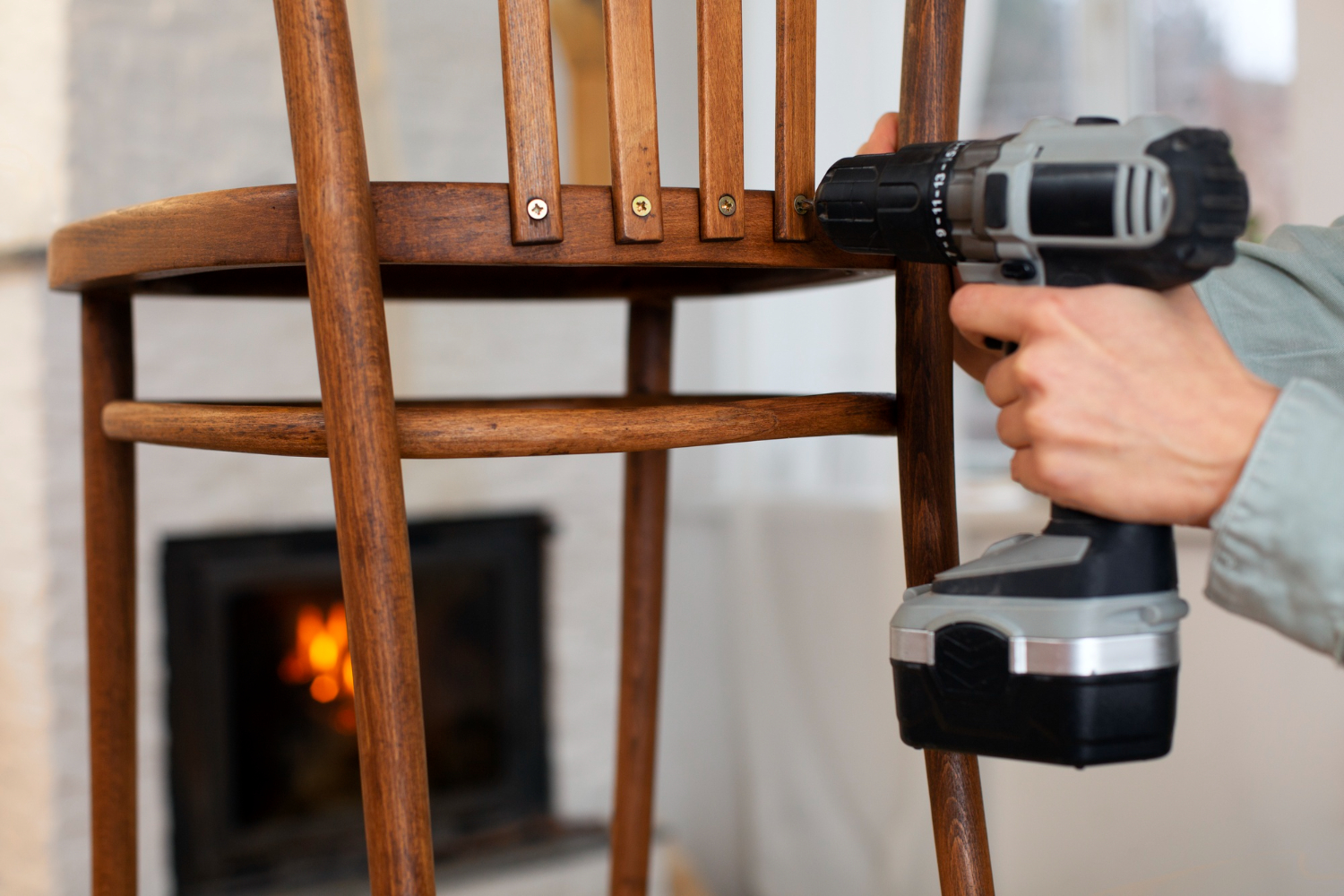
Furniture doesn’t usually fail in dramatic fashion. It gets wobbly. A leg loosens. A cushion sags. A drawer starts sticking. And at some point, you’re left deciding whether to fix it or finally let it go.
The honest answer is that there’s no universal rule—but there are patterns that make the decision a lot clearer once you know what to look for.
Start With a Simple Question: Is the Structure Still Solid?
Before thinking about cost or aesthetics, check the frame.
If the core structure is intact, repair is usually worth considering. That includes:
- Solid frame with no major cracks or breaks
- Legs that can be re-tightened or reattached
- Drawers or doors that still align properly
If the structure is compromised, replacement often makes more sense. A broken frame rarely becomes “like new” again.
Repair Makes Sense When the Problem Is Localized
Some issues look worse than they are.
Good candidates for repair:
- Loose joints or screws
- Worn drawer slides
- Sagging cushions
- Scratched or worn finishes
- Small veneer chips or surface damage
These are usually fixable with:
- Wood glue and clamps
- Replacement hardware
- Reupholstery or cushion refilling
- Sanding and refinishing
In these cases, repair is often cheaper and faster than replacing the entire piece—and you keep something that may have better build quality than modern budget furniture.
Replace When the Core Is Failing
Some problems signal that the furniture has reached the end of its useful life.
Strong reasons to replace:
- Broken or split frame (especially load-bearing parts)
- Severe warping or twisting
- Particleboard swelling or crumbling
- Multiple structural failures happening at once
Once the internal structure goes, repairs become temporary patches rather than real fixes. You might stabilize it, but you won’t restore long-term reliability.
Cost Rule: The 50–70% Guideline
A practical way to decide is cost vs value.
If repair costs:
- Less than ~50% of replacement → repair is usually worth it
- More than ~70% → replacement makes more sense
But there’s a catch: sentimental value and quality matter too. A well-built solid wood piece might be worth repairing even if it’s expensive. A cheap particleboard item usually isn’t.
Material Changes Everything
The same damage means very different things depending on what the furniture is made of.
Solid wood:
- Highly repairable
- Can be sanded, reglued, refinished
- Often improves with restoration
Plywood:
- Moderately repairable
- Good for structural fixes and hardware replacement
Particleboard / MDF:
- Limited repair potential
- Swells, crumbles, and doesn’t hold screws well over time
- Often not worth fixing if structural damage occurs
This is why older furniture often gets repaired while newer budget pieces get replaced.
Emotional Value Is Real (But Should Be Limited)
Some pieces aren’t just functional—they’re tied to memories or meaning.
That matters, but it helps to separate:
- Sentimental value (worth preserving if possible)
- Functional value (does it still serve its purpose well?)
If something is meaningful and repairable, it’s usually worth fixing. If it’s meaningful but structurally unsafe, replacement with a similar style might be the better compromise.
Environmental and Practical Considerations
Repairing furniture is often the more sustainable option:
- Less landfill waste
- Lower material consumption
- Preserves higher-quality older craftsmanship
But sustainability shouldn’t override practicality. If a piece constantly fails or requires repeated repairs, replacing it can actually be the more reasonable long-term choice.
A Quick Decision Checklist
Repair if:
- The frame is solid
- Damage is surface-level or mechanical
- Replacement cost is high relative to repair
- The material is solid wood or good plywood
Replace if:
- The structure is broken or warped
- Repairs would be frequent or temporary
- It’s made from low-quality particleboard
- Safety or stability is compromised
Furniture doesn’t need to be automatically replaced the moment something goes wrong—but it also shouldn’t be endlessly patched together.
Good pieces are worth maintaining. Weak pieces are usually worth replacing.
The real skill is recognizing the difference early—before you spend time and money trying to revive something that was never built to last in the first place.